.png "white on transparent (1)")
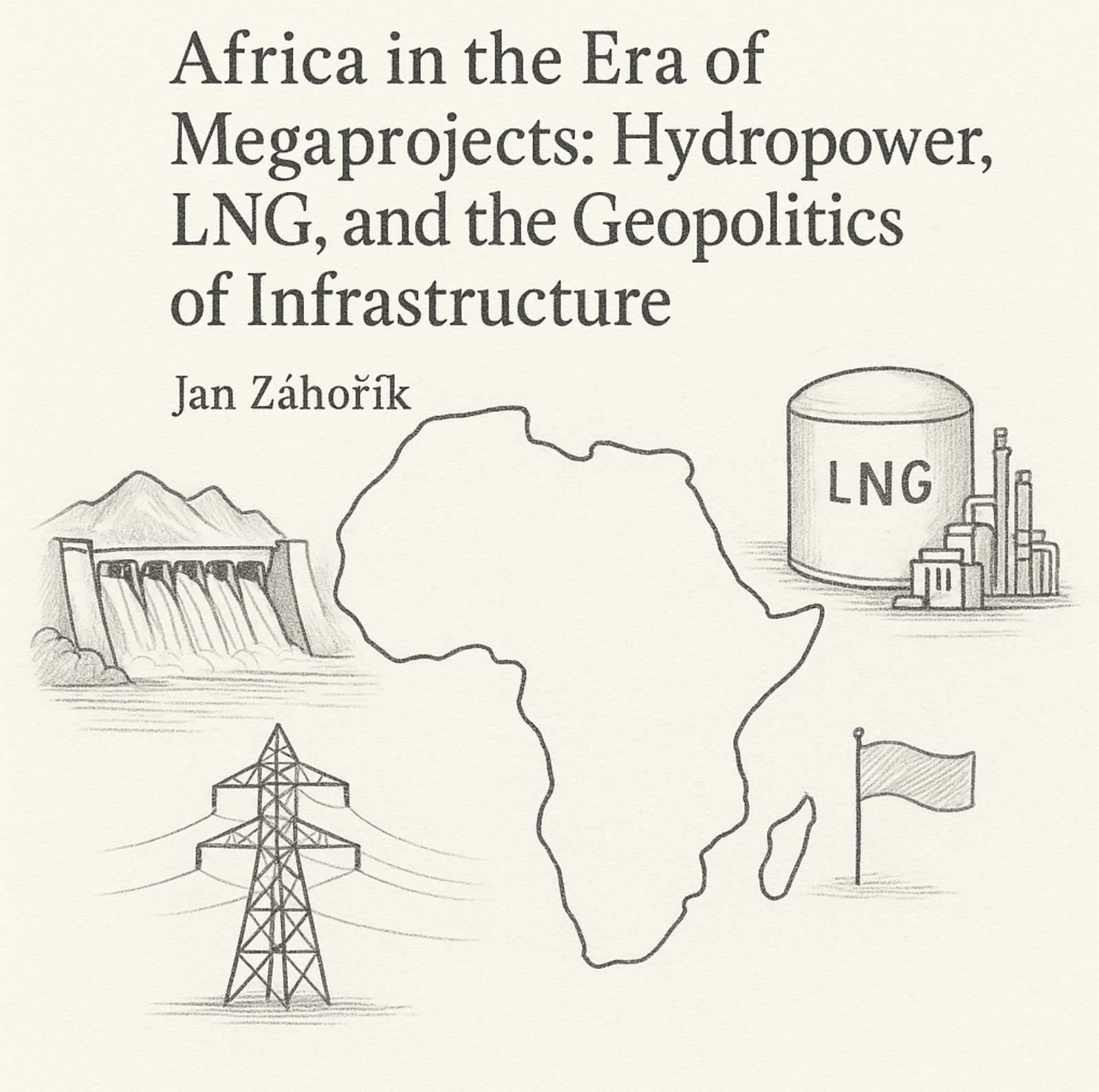
Africa today is entering what might be called a megaproject moment. Across the continent, massive infrastructure investments—hydropower dams, liquefied natural gas (LNG) complexes, fertilizer factories, and solar parks—are transforming national economies and reconfiguring regional power dynamics. Projects like Ethiopia’s Grand Ethiopian Renaissance Dam (GERD), Mozambique’s Cabo Delgado LNG megaproject (delayed due to security concerns), and Nigeria’s and Ethiopia’s new fertilizer plants are not simply national triumphs. They are emblematic of a broader struggle for sovereignty, integration, and influence at a time when Africa is increasingly central to the global economic and geopolitical landscape. Only the fact that Africa has 54 seats in the African Union makes it an attractive partner to global or external powers.
Africa has long been a site of infrastructural ambition, from colonial railways to post-independence industrial projects. What makes the current moment a bit different from the distant past is the intersection of three elements: (1) Africa’s own drive for economic self-determination, (2) the global competition for resources and markets, and (3) the need to balance development with quality of living standards, including air pollution and climate change.
National Ambitions
The GERD, inaugurated in 2025, epitomizes Africa’s new infrastructure politics. At 6000 MW, it is Africa’s largest hydroelectric dam and a symbol of Ethiopian pride, which we have written about in the previous CSIORS piece. The project’s significance extends well beyond Ethiopia’s borders. It impacts Egypt and Sudan due to its critical importance for agriculture and most of the population living along the Nile banks. For Addis Ababa, the GERD is about power generation, industrialization, and national sovereignty. For Cairo, it is about existential water security. The dam thus illuminates how a single megaproject can reconfigure regional politics, shifting bargaining power and raising the stakes of cooperation—or conflict.
Similarly, Mozambique’s LNG projects in Cabo Delgado are projected to transform the country into one of the world’s top natural gas exporters. Their impact is inherently regional and global: LNG from Mozambique is seen in Europe as a diversification away from Russian gas. For Mozambique, revenues could be transformative, but only if they are managed transparently and not consumed by corruption or captured by elites. Unfortunately, the immediate security crisis in Cabo Delgado—fueled by insurgency and socio-economic marginalization—demonstrates how megaprojects can exacerbate fragility if not embedded in inclusive governance. Or, on the other hand, how security issues correlate with economic interests.
Continental Integration and African Sovereignty
At the pan-African level, these megaprojects link directly to the vision of the African Continental Free Trade Area (AfCFTA). Large-scale dams and energy projects have the potential to feed not only domestic grids but also regional power pools, creating new opportunities for cross-border trade. Initiatives such as the Mphanda Nkuwa dam in Mozambique or solar wheeling projects in South Africa could underpin continental integration by making electricity a shared commodity, although some of these projects are still in the making.
Equally important are industrial projects aimed at reducing Africa’s dependence on external supply chains. The construction of fertilizer complexes in Ethiopia and Nigeria is part of a larger push toward agricultural sovereignty, shielding African farmers from the volatility of global commodity markets. In this sense, megaprojects are about more than infrastructure; they are instruments of sovereignty, enabling African states to renegotiate their place in global value chains.
Yet sovereignty is fragile when financing is externally driven. Many projects rely heavily on external capital—whether from China, Gulf sovereign wealth funds, Western development banks, or multinational corporations. This may raise some new questions such as: does the current megaproject boom enhance African agency, or does it entrench dependency under new terms?
Global Politics and the Infrastructure Race
Globally, Africa’s megaproject moment reflects a new phase in the infrastructure race. China has dominated large-scale financing for two decades through its Belt and Road Initiative, reshaping African transport, energy, and communications networks. But the landscape is now diversifying. And especially the Middle East is playing an increasingly important role in it. Gulf states are investing in ports and logistics; European companies are partly re-entering the African energy sector (especially LNG); and the United States, under the Trump administration, is trying to redefine its position in Africa, as a counterweight to Chinese influence.
This competition provides African governments with greater room to maneuver. No longer dependent on a single financier, they can bargain for better terms. However, it also creates new geopolitical entanglements, as projects become arenas where global rivalries play out. Mozambique’s LNG, for example, is not just about African energy—it is about Europe’s search for alternatives to Russian gas and Asia’s hunger for long-term supply contracts. Ethiopia’s GERD, meanwhile, has become entangled in broader Middle Eastern politics, with Gulf states and external actors mediating or leveraging Nile diplomacy.
In this sense, Africa’s megaprojects are not peripheral; rather, we may consider them part of the restructuring of the global order.
The scale of investment is enormous. Ethiopia’s GERD cost over $5 billion; Mozambique’s LNG projects are valued at over $20 billion; fertilizer complexes run into the billions. The risks are equally significant. Debt sustainability is a looming concern, especially for states already under fiscal stress. Social displacement, ecological disruption, and local grievances—often overlooked in planning—can undermine long-term viability.
Conclusion: Continental Pivot Points
Africa’s new dams, LNG terminals, and industrial complexes are not isolated national endeavors. They are continental pivot points with global resonance. They illuminate how Africa is repositioning itself in a fractured world order—where resources, infrastructure, and energy are central to power.
The stakes are high. Success could mean not just electricity, fertilizers, and export revenues, but a more interconnected Africa capable of shaping its own destiny. Failure, however, could extend fragility, intensify inequalities, and deepen dependency.
In this light, Africa’s megaproject moment is not just about engineering feats. It is about the future of sovereignty, the possibility of continental integration, and Africa's role in the global transition to a new economic and political order.