.png "white on transparent (1)")
For decades, the paradox of oil wealth has haunted Nigeria. Africa’s largest oil producer has long suffered from the very resource that should have guaranteed its prosperity. Instead of spurring inclusive development, oil in Nigeria has been the engine of sabotage, corruption, and conflict—especially in the oil-rich Niger Delta. For decades, pipeline sabotage and crude theft have plundered the nation’s wealth, undermining Nigeria’s sovereignty over its resources. Criminal networks have siphoned vast quantities of oil in the Niger Delta. This economic sabotage drains billions in revenue. By 2023, Nigeria was reportedly losing around 200,000 barrels of crude per day to theft. The recent opening of the Dangote Refinery—though marred by political obstruction and boycott—signals both the potential and the persistent obstacles that define Nigeria’s energy sector.
A History Written in Spills and Smoke
The roots of oil sabotage in Nigeria stretch back to the discovery of crude oil in Oloibiri, Bayelsa State, in 1956. While oil transformed Nigeria into an economic powerhouse, it also deepened regional inequalities, eroded state accountability, and enriched corrupt elites. After the 1970s, the centralization of oil revenues created a system where federal and state actors vied for a share of the oil revenue, leaving local communities dispossessed and environmentally devastated.
By the 1990s and 2000s, the Niger Delta had become synonymous with militant insurgency, bunkering (the illegal tapping of oil pipelines), and violent protests. Groups like the Movement for the Emancipation of the Niger Delta (MEND) framed oil sabotage as a form of resistance against exploitation by multinational oil companies and the Nigerian state. Pipelines were routinely blown up to extract crude or to send a political message. Despite amnesty deals and military crackdowns, this cycle has continued into the present.
Oil theft as industry
Oil theft in Nigeria reached unprecedented levels over the past decade, with both artisanal bunkerers and sophisticated syndicates tapping pipelines on an industrial scale. The Nigeria Extractive Industries Transparency Initiative’s (NEITI) audits reveal a staggering 362 million barrels lost between 2014 and 2023 due to theft, sabotage, and related deferments.
The crisis peaked in 2016 when over 101 million barrels were stolen or deferred. Daily loss averaged 278,000 barrels, an amount far exceeding the daily output of some OPEC members. Militant groups ruptured pipelines and shut in production. Losses fell after a 2016 amnesty, only to surge again by 2018–2019 to around 100,000–146,000 bpd.
Another noteworthy period of brazen theft was in 2022. Nigeria’s crude exports dropped below 1 million bpd in August 2022, the first time since 1990. As noted by the then Nigerian National Petroleum Corporation (NNPC) chief, rampant theft and vandalism stripped away an estimated 600,000 barrels per day of output. In the same year, an illicit 4-kilometer pipeline that had been operating undetected for nine years was discovered running from Shell’s Forcados export terminal into the sea.
The economic toll of oil theft has been devastating. Nigeria depends on petroleum for approximately 80% of export earnings and the bulk of government revenue. Every barrel stolen or deferred translates to lost income for a nation perpetually battling budget shortfalls. According to NEITI estimates, Nigeria lost over $46 billion between 2007 and 2020 to oil theft and vandalism. Data from NNPC indicates that theft-related deferred production will cost $23 billion in 2022. These shortfalls widen fiscal deficits, starve infrastructure and social programs of funding, and weaken the national currency.
The Corruption Nexus
Oil theft in Nigeria is not the work of petty criminals but a sophisticated network involving community actors, military officials, political patrons, and international traders. Small-scale “refineries” operate deep in the mangroves, refining stolen crude under primitive and polluting conditions. At the heart of this criminal economy is a state apparatus that oscillates between complicity and incapacity. Patronage politics and institutional rot have undermined the efforts of successive governments to curb oil theft. Security forces tasked with protecting pipelines have often been found to be complicit in their destruction.
Oil corruption in Nigeria is systemic. From inflated contracts at the NNPC to the opacity of oil swap deals and licensing rounds, billions have vanished into offshore accounts. The NEITI has tried to impose transparency, but enforcement remains weak. Attempts at reform—such as the Petroleum Industry Act (PIA) passed in 2021—have yet to significantly alter the landscape. The result is a public sector that depends almost entirely on oil rents, a private sector that struggles with energy insecurity, communities fraught with environmental damage, and a population that sees little benefit from the country’s vast hydrocarbon wealth.
The Refinery That Almost Wasn't
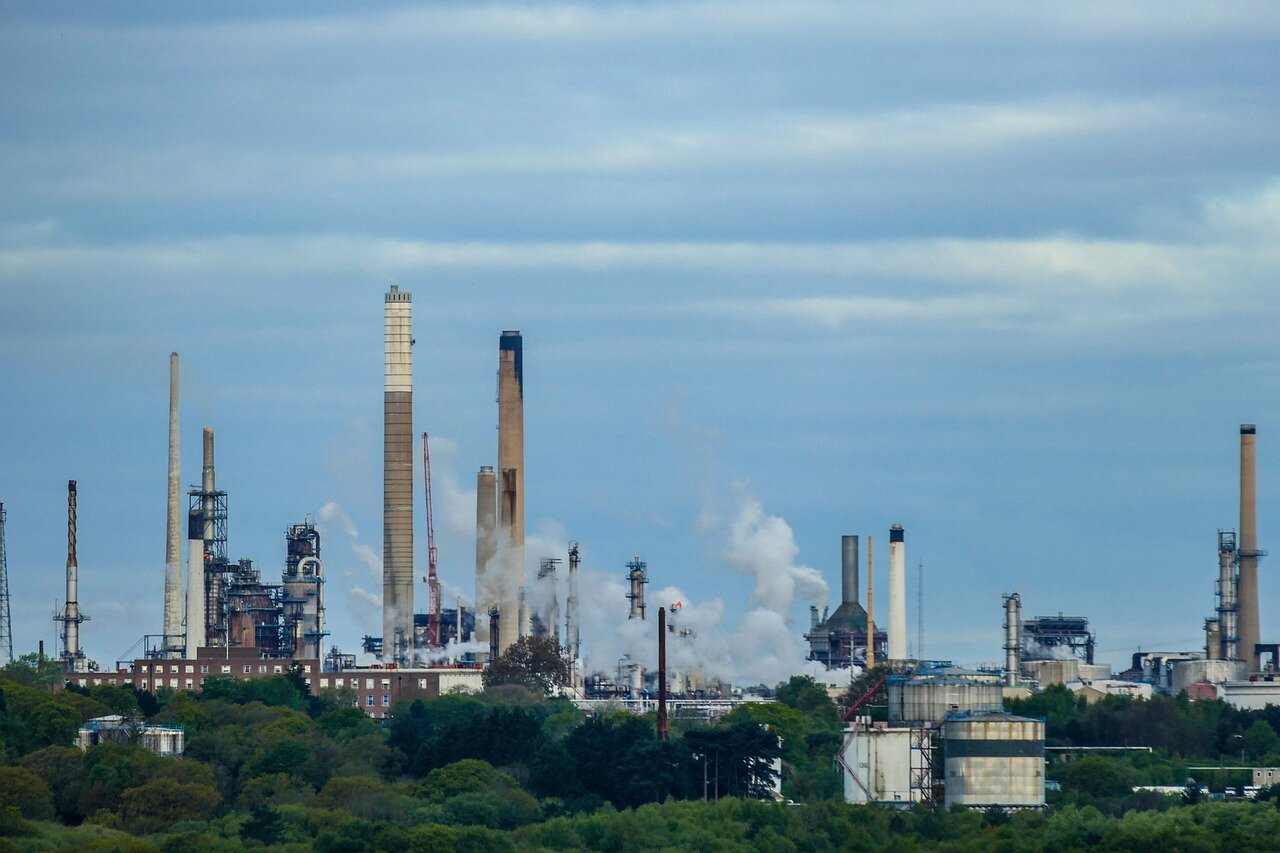
In this bleak context, the opening of the Dangote Refinery in 2024 was hailed as a potential game-changer for Nigeria. Backed by Africa’s richest man, Aliko Dangote, the refinery is projected to process 650,000 barrels per day, making it the largest single-train refinery in the world. Despite promises to reduce Nigeria’s dependence on imported refined fuels, save billions in foreign exchange, and finally provide the domestic processing capacity the country has lacked for decades, its journey to completion was anything but smooth.
The project faced extended delays due to political opposition and bureaucratic sabotage. Several influential figures within the petroleum sector and political class reportedly sought to block the refinery’s progress, viewing it as a threat to entrenched interests in fuel importation and oil rents. Even after its commissioning, the federal government’s initial refusal to guarantee crude oil supply to the refinery revealed the depth of resistance to reform. Only under mounting public pressure and investor scrutiny did the NNPC agree to begin supplying the needed crude.
Now in full operation and distribution, the Dangote Refinery may not solve all of Nigeria’s problems. It will take years for it to reach full capacity and stabilize production. Yet it represents a critical shift: a move toward value-added processing, local content, and economic sovereignty. Nevertheless, for the refinery to make a real difference, it must be accompanied by broader reforms: cracking down on oil theft, cleaning up corruption in the petroleum sector, investing in alternative energy, and rebuilding trust in the rule of law.
A Cautious Optimism
The federal government has embarked on a range of reform initiatives and enforcement actions—a “long road” to change the status quo. In 2022, Nigeria’s armed forces intensified operations against oil theft under various code-named missions, combining naval campaigns with joint task force initiatives on land. These missions, bolstered by high-tech surveillance and tracking systems, have led to numerous raids on illegal refineries and the seizure of stolen crude. Military officials report visible disruption of oil theft networks and hundreds of arrests. Critics, however, note that many kingpins still evade arrest.
The government has also pursued an amnesty and engagement strategy. Notably, authorities outsourced pipeline surveillance contracts to former militant leaders, leveraging their local influence to protect infrastructure. Stakeholders acknowledge that these private surveillance efforts significantly curbed oil theft where official security forces had struggled. The program has not been without challenges, however. It spurred demands from other militant groups for similar contracts.
There are also initiatives to deploy advanced digital monitoring of production and pipeline flows. Lawmakers are also advocating AI-powered pipeline surveillance drones and satellite tracking of vessels.
On the regulatory front, Nigeria’s Petroleum Industry Act (PIA) of 2021 stands as the cornerstone of long-term sector reform. The PIA overhauled NNPC into a commercial entity, streamlined royalties and licensing, and crucially introduced mechanisms for greater transparency and accountability in oil operations. It remains the anchor for further reforms, such as legal penalties for oil-related crimes, currently under review.
Nigeria is also balancing community engagement to address root causes with international cooperation to block foreign sales of stolen oil. There is recognition, too, that fighting corruption is non-negotiable. The government pledges to root out internal collaborators and improve oversight of oil metering and accounting.
Nigeria’s oil sector has for too long served the interests of the few at the expense of the many. The refinery’s flame now burns as a symbol of what is possible—but only if the sabotage ends not just on the pipelines, but in the corridors of power.